

If you’ve ever paused mid-sentence wondering whether someone “violated” a contract or “breached” it, you’re not alone. 📝 These two words look like they mean the same thing, but native speakers, lawyers, and editors treat them very differently.
This guide breaks down the real difference between violate and breach, shows you exactly when to use each one, and gives you simple tests you can use in everyday writing. ✅
Quick Answer: Violate vs Breach
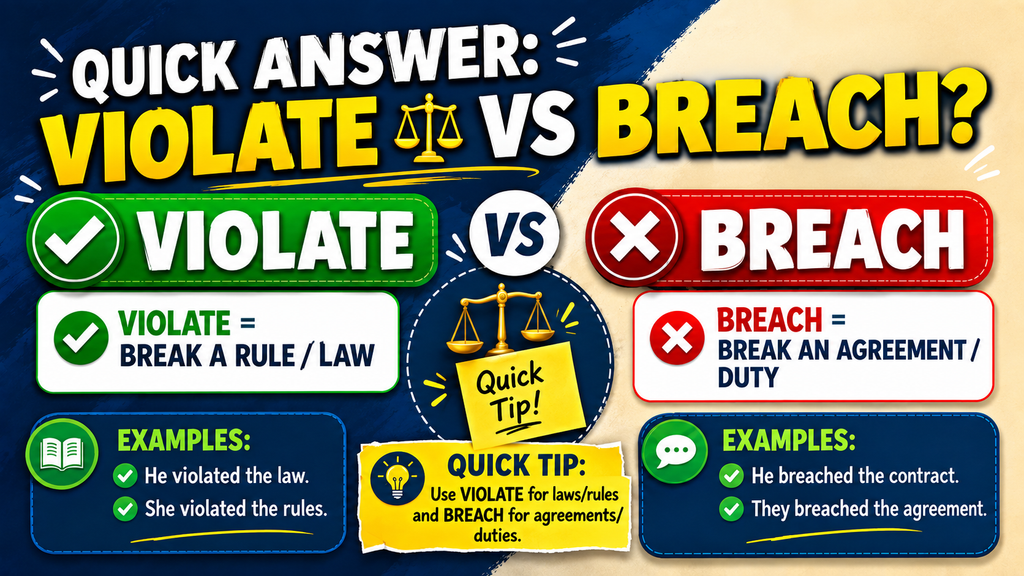
- Violate = to break a rule, law, right, or moral standard. 🚫
- Breach = to break an agreement, contract, security system, or trust. 🔓
- Rule of thumb: you violate what should be respected, and you breach what should be protected or maintained. 💡
Understanding the Basics of Violate vs Breach
Both words describe an act of “breaking” something, so it’s easy to see why people mix them up. 🤔 The real difference lies in what gets broken and how formal the situation is.
Core Difference
| Aspect | Violate | Breach |
|---|---|---|
| What is broken | Rules, laws, rights, principles | Agreements, contracts, security, trust |
| Tone | Ethical or legal | Formal, legal, or technical |
| Part of speech | Mostly a verb | Verb and noun |
| Typical field | Law, ethics, personal rights | Business, cybersecurity, contracts |
What Does “Violate” Mean?
Violate means to break, disobey, or fail to respect a law, rule, right, or standard. 📖 It often carries a sense of ethical or legal wrongdoing, and it’s almost always used as a verb.
Examples
- The company violated several safety regulations. ⚠️
- Reading someone’s private messages violates their trust and privacy.
- The new policy violates the employee handbook.
- He was fined for violating the noise ordinance.
Sentence Breakdown
In “The driver violated traffic laws,” the subject (driver) actively goes against an established rule (traffic law). 🚗 The word signals that something important — a law or right — was disrespected.
Test Tip
If you can replace the word with “disrespect” or “disobey” and the sentence still makes sense, violate is usually correct. ✅
What Does “Breach” Mean?
Breach means to break an agreement, obligation, or barrier — something that was supposed to stay intact. 🔐 Unlike violate, breach also works as a noun, and it doesn’t always imply bad intent.
Examples
- The vendor breached the terms of the contract. 📄
- Hackers exploited a security breach in the system.
- Sharing confidential data is a clear breach of trust.
- The company suffered a data breach last quarter.
Sentence Breakdown
In “The firm breached the agreement,” the word points to a specific, mutual arrangement that was broken — not a general law or moral rule. 🤝 This is why “breach” dominates business and legal writing.
Test Tip
If the sentence involves a contract, security system, or promise between two parties, breach is almost always the safer choice. 🔍
Violate vs Breach: Side-by-Side Comparison
| Feature | Violate | Breach |
|---|---|---|
| Main meaning | Break a rule, law, or right | Break an agreement, barrier, or trust |
| Can be a noun? | Rarely (use “violation”) | Yes (“a security breach”) |
| Common collocations | violate a law, violate rights | breach of contract, data breach |
| Implies intent? | Usually deliberate | Can be accidental or unintentional |
| Example sentence | She violated the dress code. | The bank breached its own policy. |
Case Study Section
Real-world examples make the difference easier to remember. 🏢
Workplace Example
An employee shares confidential client files with a competitor. Because this breaks a formal confidentiality agreement, it’s a breach of contract — but because it also disrespects the company’s ethical standards, it could also be called a violation of policy.
Which Word Fits Best?
- Formal contract broken → breach 📑
- Rule, law, or ethical standard broken → violate ⚖️
Another Situation
A manager ignores a signed non-compete agreement and joins a rival firm the next week.
Email Example
“This is to notify you that your actions constitute a breach of the non-compete agreement signed on [date], and further violate company conduct policy.” 📧 Notice how both words can appear together — each pointing to a different type of wrongdoing.
Grammar Rules Explanation
Knowing the grammar behind each word helps you avoid awkward sentences. 🧠
Violate
- Functions almost exclusively as a verb. ✍️
- The noun form is violation, not “violate.”
- Correct: He violated the agreement. Incorrect: He committed a violate.
Breach
- Works as both a verb and a noun. 🔄
- Correct as a verb: They breached the deal.
- Correct as a noun: A serious breach occurred.
Common Mistakes
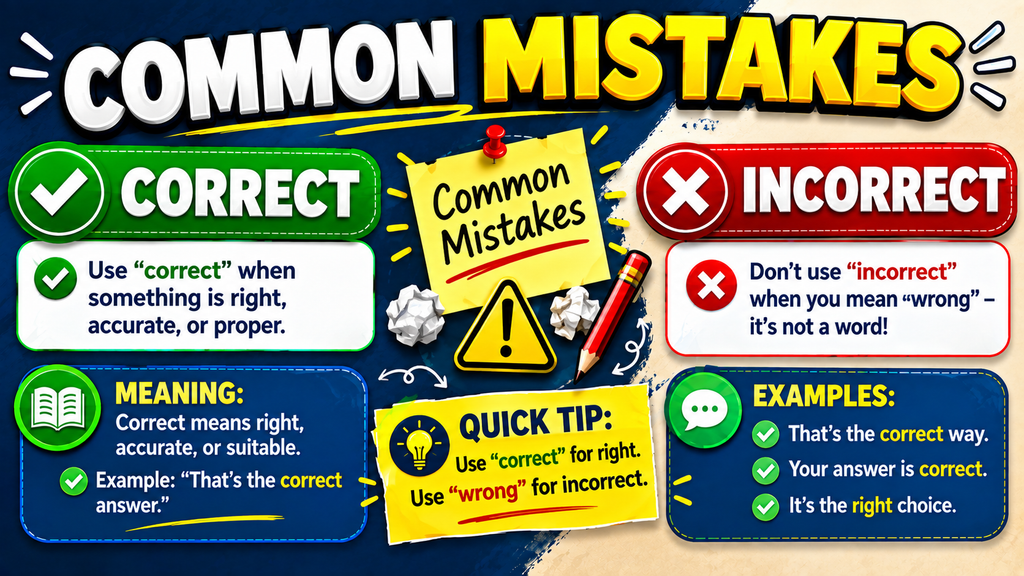
Even confident writers slip up here. 😅 The most frequent error is using “breach” with laws (“he breached the law” ❌) instead of “violated the law” ✅. Another is using “violate” for data security incidents instead of “breach.”
Why Mistakes Happen
Fast Typing
When typing quickly, writers grab whichever word comes to mind first, without checking context. ⌨️
Autocorrect
Some autocorrect tools suggest the more common word, “violate,” even in legal or technical contexts where “breach” fits better. 📱
Lack of Knowledge
Many learners simply were never taught the subtle contextual difference between the two. 📚
Similar Grammar Confusions
This mix-up is similar to other commonly confused pairs, such as infringe vs. violate or break vs. breach, where overlapping meanings blur the boundary between formal and general usage. 🔁
Usage in Different Contexts
Context changes everything when choosing between these two words. 🌍
Everyday Conversation
People often say “you’re violating my space” — casual, direct, and rule-based. 🗣️
Professional Writing
Business documents favor “breach” for contracts and “violate” for policy or compliance issues. 💼
Creative Writing
Writers may use “violate” for emotional or moral weight, such as violating someone’s dignity or trust. ✒️
Social Media and Texting
Short-form platforms lean heavily on “violate” (e.g., “this violates community guidelines”) since it’s the standard legal phrasing used in platform policies. 📲
Why It Matters
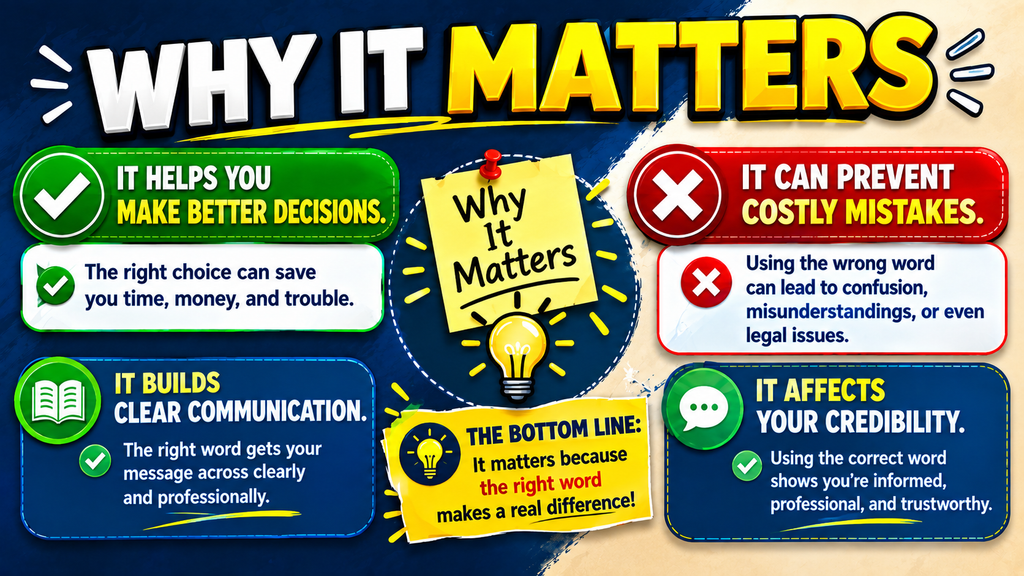
Choosing the right word isn’t just about grammar — it shapes how your message is understood. 🎯
Clarity in Communication
Using the precise word avoids confusion about what actually happened — a broken rule or a broken agreement. 🔎
Professionalism
In legal, HR, or business writing, the wrong word can weaken a formal complaint or contract dispute. 👔
Writing Accuracy
Precise word choice reflects strong command of English, which matters in academic and professional settings. 🖋️
Better Digital Communication
Correct usage helps avoid ambiguity in emails, reports, and official notices sent across teams. 📨
Choose the word that matches what was actually broken — a rule, or a promise — and your sentence will always sound right. 💬
Special Exception
While “breach” usually applies to formal agreements, it can also describe breaking a physical barrier — for example, “the flood breached the dam.” 🌊 This physical sense has nothing to do with law or ethics, which is why context always matters more than memorized rules.
Example
“Water breached the levee during the storm” uses breach in its original, literal sense of an opening or gap, not a broken agreement. 🌧️
Quick Recap Checklist
- ✅ Use violate for laws, rules, rights, and ethical standards.
- ✅ Use breach for contracts, agreements, security, and trust.
- ✅ Remember “breach” can be a noun; “violate” usually cannot.
- ✅ When in doubt, ask: Is this a rule or a relationship/agreement?
Which Word Should You Use?
If you’re still unsure, ask yourself one simple question: was something broken that should have stayed whole (breach), or was something disrespected that should have been followed (violate)? 🧩
Practice Examples
Test yourself with these quick fill-in-the-blank sentences. ✏️
Example 1
“The company ______ the data protection law by selling customer information.” → violated (a law was broken)
Example 2
“Their supplier ______ the delivery contract by missing three deadlines.” → breached (an agreement was broken)
Example 3
“Unauthorized staff accessed the server, causing a major security ______.” → breach (used as a noun)
Frequently Asked Questions
Is “breach” more serious than “violate”?
Not necessarily — breach often relates to formal agreements, while violate relates to laws or rights; severity depends on context, not the word itself. ⚖️
Can “violate” be used as a noun?
No, the correct noun form is “violation,” not “violate.” 📌
Is “breach of contract” the same as “violation of contract”?
“Breach of contract” is the standard legal term; “violation of contract” is understood but less commonly used formally. 📜
Which word is used for data security incidents?
“Breach” is the standard term, as in “data breach” or “security breach.” 💻
Can you breach a law?
Grammatically it’s understood, but “violate a law” is the more accurate and widely accepted phrase. ✅
Do lawyers prefer one word over the other?
Yes — legal writing typically reserves “breach” for contracts and “violate” for statutes, laws, and rights. 👩⚖️
Conclusion
Both violate and breach describe broken rules or agreements, but they’re not interchangeable. 🔑 Violate fits laws, rights, and ethical standards, while breach fits contracts, security, and trust-based relationships. Once you remember this simple split, choosing the correct word becomes automatic — in emails, contracts, reports, and everyday conversation alike. ✨
