

Someone just helped you out, and you start typing a thank-you. Then you stop. Is it “I appreciate it” or “I appreciated it”? 😅
The difference is small, but it changes the time frame of your thanks. This guide explains the meaning of each phrase, when to use it, and how to avoid the mistakes people make in emails, texts, and conversation. ✅
Quick Answer: Appreciate It vs Appreciated It
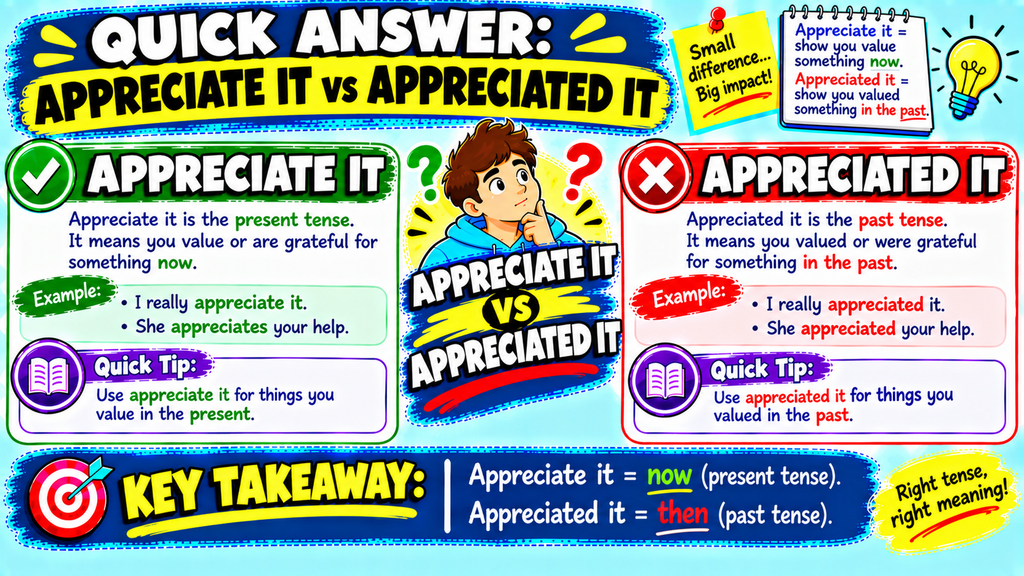
“Appreciate it” is present tense and shows gratitude you feel right now. “Appreciated it” is past tense and describes gratitude you felt earlier. Both are correct, and the right choice depends on when the appreciation happens. 🎯
| Phrase | Tense | Best For | Example |
|---|---|---|---|
| Appreciate it | Present | Thanking someone now | “Thanks for the ride. I appreciate it.” |
| Appreciated it | Past | Describing earlier gratitude | “I appreciated it when you called.” |
Understanding the Basics: Appreciate It vs Appreciated It
Both phrases come from one verb: appreciate. It means to value something, recognize its worth, or feel thankful for it. 🙌
In “I appreciate it,” the word “it” is the object. It stands for the favor, gift, advice, or effort you are thankful for. Only the verb tense changes between the two phrases.
- Appreciate is the base (present) form.
- Appreciated is the past tense and past participle.
- Appreciating is the continuous form.
Correct Meanings & Uses
When to Use “I Appreciate It”
Use “I appreciate it” when your gratitude is active at the moment you speak or write. 💬 It works in these situations:
- Thanking someone right after a favor
- Closing a polite email
- Responding to a compliment, offer, or piece of advice
- Making a request (“I’d appreciate it if you could…”)
Examples:
- “Thanks for covering my shift. I really appreciate it.”
- “You didn’t have to wait for me, but I appreciate it.”
- “I appreciate it when people give me honest feedback.”
Here is a detail many guides skip. You can say “Thanks for your help yesterday, I appreciate it.” The help happened yesterday, but the feeling of thanks is happening now. 👍
Test Tip: Ask yourself, “Am I feeling thankful as I say this?” If yes, choose appreciate it.
When to Use “I Appreciated It”
Use “I appreciated it” when you are describing gratitude that belongs to the past. 🕰️ It often appears in stories, reviews, reflections, and reports about what someone felt.
Examples:
- “When I moved to a new city, I appreciated it when my neighbor brought dinner.”
- “She didn’t say much, but I could tell he appreciated it.”
- “I appreciated the honesty during that meeting.”
Test Tip: Try adding “at the time” to the end of your sentence. If it still makes sense, choose appreciated it.
Sentence Comparison
Seeing both forms side by side makes the pattern easy to spot. 👀
| Situation | Correct Phrase | Example Sentence |
|---|---|---|
| Thanking a friend right now | Appreciate it | “You brought snacks? Appreciate it!” |
| Telling a story about last week | Appreciated it | “He fixed my bike, and I appreciated it.” |
| Replying to a recent favor | Appreciate it | “Thanks for the update. I appreciate it.” |
| Describing how someone felt | Appreciated it | “The team appreciated it when we stayed late.” |
| Polite request | Would appreciate it | “I’d appreciate it if you could reply today.” |
| Looking back with regret | Would have appreciated it | “I would have appreciated it if you’d told me sooner.” |
Case Study Section
Here is a short workplace email with two tense errors. 📧
Incorrect Email:
Hi Dana,
Thank you for helping me with the slides last week. I appreciate it when you stayed after hours to fix the charts. Also, I appreciated it if you could send the final budget by Friday.
Best,
Chris
Correct Version:
Hi Dana,
Thank you for helping me with the slides last week. I appreciated it when you stayed after hours to fix the charts. Also, I would appreciate it if you could send the final budget by Friday.
Best,
Chris
What changed?
- “I appreciate it when you stayed” mixes a present verb with a past event. It becomes “I appreciated it when you stayed.”
- “I appreciated it if you could send” is wrong because a request looks forward. It becomes “I would appreciate it if you could send.”
Grammar Rules Explanation
Why One Form Is Correct and the Other Can Be Incorrect
Neither phrase is wrong by itself. A mistake happens when the tense does not match the situation. ⚖️ Keep these rules in mind:
- Appreciate is a transitive verb. It needs an object, such as “it,” “your help,” or “the gesture.”
- Match the verb to the time of the feeling. Gratitude now takes the present tense. Gratitude then takes the past tense.
- After “would,” use the base form. Say “I would appreciate it,” not “I would appreciated it.”
- Watch time clues. Words like when you called or back then usually signal a past event, so the past tense usually fits.
Common Mistakes
Most errors come from habit or haste, not from a lack of skill. 😊
Fast typing
When you type quickly, the final “d” drops off. “I appreciated it” becomes “I appreciate it,” and the meaning shifts without you noticing. Reread any sentence that includes a time clue.
Autocorrect
Phones sometimes swap words or ignore tense. A quick proofread before you hit send saves you from an awkward message. 📱
Lack of grammar knowledge
Many learners memorize “I appreciate it” as a fixed thank-you phrase and use it everywhere. That works for thanking someone, but not for storytelling or reflection. 🧠
Similar Grammar Confusions
These phrases often get mixed up with the main pair. 🔍
| Pair | Key Difference | Example |
|---|---|---|
| Appreciate it / Appreciate you | “It” is a thing or action. “You” is a person. | “I appreciate it.” / “I appreciate you.” |
| Much appreciated / Appreciated | “Much appreciated” is warmer and stronger. | “Your help is much appreciated.” |
| Thank you / I appreciate it | “Thank you” is direct. “I appreciate it” shows you value the act. | “Thank you. I appreciate it.” |
| Appreciate / Appreciation / Appreciative | Verb / noun / adjective | “I appreciate it. My appreciation is real. I’m appreciative.” |
Usage in Different Contexts
Everyday Conversation
Speakers often drop the “I” and say “Appreciate it!” It sounds relaxed and friendly. 🗣️ Use “I appreciated it” when you tell a story about the past.
Professional Writing
In business emails, “I appreciate it” or “I appreciate your help” sounds polite and clear. 💼 For requests, “I would appreciate it if you could…” is the safest, most professional choice.
Creative Writing ✍
Fiction writers use “appreciated it” to show a character’s feelings in a past-tense story. In dialogue, characters may say “appreciate it” to sound natural. Pick the tense that matches the scene.
Social Media and Texting
Short replies like “appreciate it 🙏” are common and accepted. 😎 The tone is casual, so save the full sentence for formal messages.
Why It Matters
Clarity
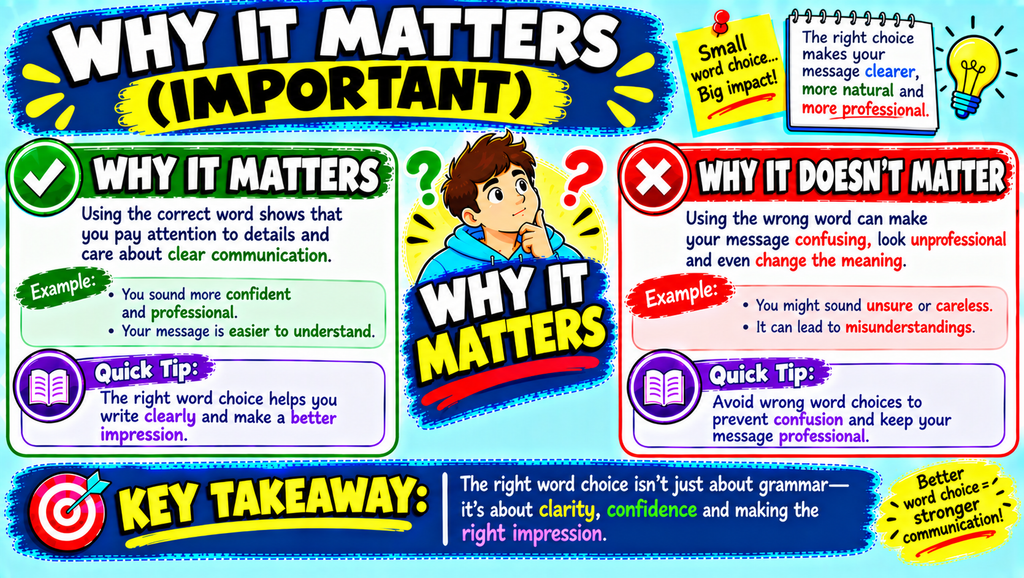
The right tense tells your reader whether you are thanking them now or remembering something earlier. 🔎
Professionalism
Clean grammar makes you look careful and credible, especially in job applications and client emails. 🏢
Writing accuracy
Small errors add up. A polished sentence builds trust with your reader. ✨
Digital communication
People skim quickly online. A correct phrase keeps your message smooth and easy to read. 💻
Special Exception
A few cases break the simple “present vs past” rule. ⚠️
- “I’d appreciate it if…” This is a polite request about the future. The verb stays in the base form after “would.”
- “I would have appreciated it…” This expresses a past wish or regret, such as “I would have appreciated it if you had called.”
- “Appreciate it.” In casual speech, dropping the subject is fine.
- Money and value: In “The house appreciated in value,” the verb means increased in worth, which is a different meaning from gratitude.
Quick Recap Checklist
- ✅ “Appreciate it” is present. “Appreciated it” is past.
- ✅ Thanking someone now? Use appreciate it.
- ✅ Describing earlier gratitude? Use appreciated it.
- ✅ Making a polite request? Use would appreciate it.
- ✅ Avoid “appreciated it if” in requests.
- ✅ Proofread for dropped “d” endings.
- ✅ Check time clues like “last week” or “when you called.”
Frequently asked questions
What is the difference between “appreciate it” and “appreciated it”?
“Appreciate it” is present tense and shows gratitude now. “Appreciated it” is past tense and shows gratitude felt earlier.
Is “appreciated it” grammatically correct?
Yes. It is the correct past tense when you describe gratitude from an earlier time.
Can I say “I appreciate it” for something that happened yesterday?
Yes. Your thanks is happening now, even if the favor happened yesterday.
Which is better in a professional email?
“I appreciate it” works for thanks, and “I would appreciate it if you could…” works for requests.
Is “I’d appreciate it if” correct?
Yes. “I’d” is short for “I would,” and the verb stays in the base form.
Is “appreciate it” too casual for work?
Not usually. Adding “I” or a detail, like “I appreciate your quick reply,” makes it more formal.
Why do people say “appreciate it” without “I”?
It is a natural spoken shortcut. The subject is understood, so the phrase stays clear.
Should I say “appreciate it” or “appreciate you”?
Use “it” for a thing or action and “you” for the person.
Conclusion
The difference between “appreciate it” and “appreciated it” comes down to timing. Use appreciate it for gratitude you feel now, and appreciated it for gratitude you felt before. 🎉
