

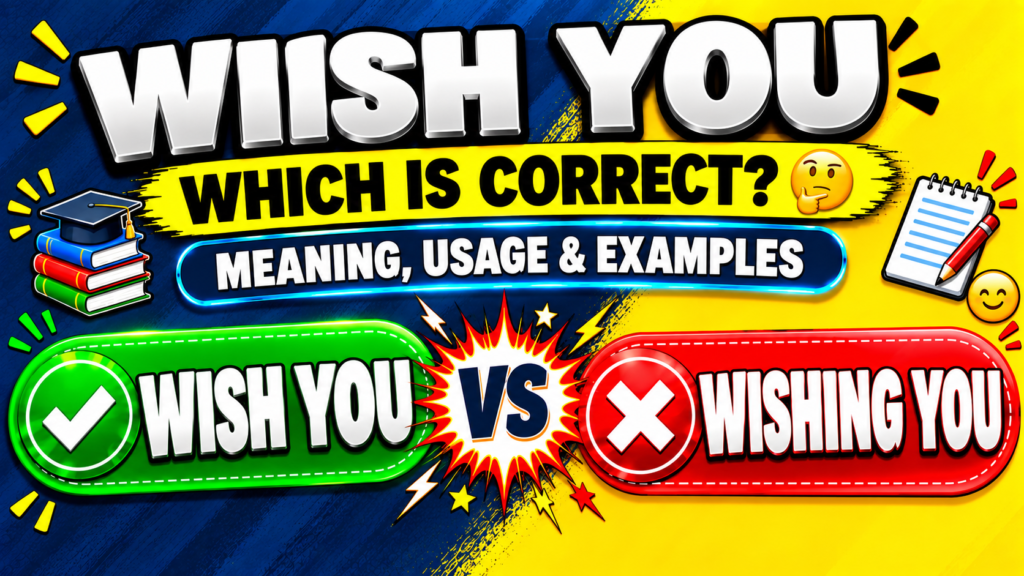
You are writing a birthday card and pause at the first line. Should it say “Wish you a happy birthday” or “Wishing you a happy birthday”? 🎂
Both phrases look right, and both show up everywhere. Yet they work differently in grammar. This guide explains what each one means, when to use it, and how to avoid the slip-ups that make a warm message sound off. ✅
Quick Answer: Wish You vs Wishing You
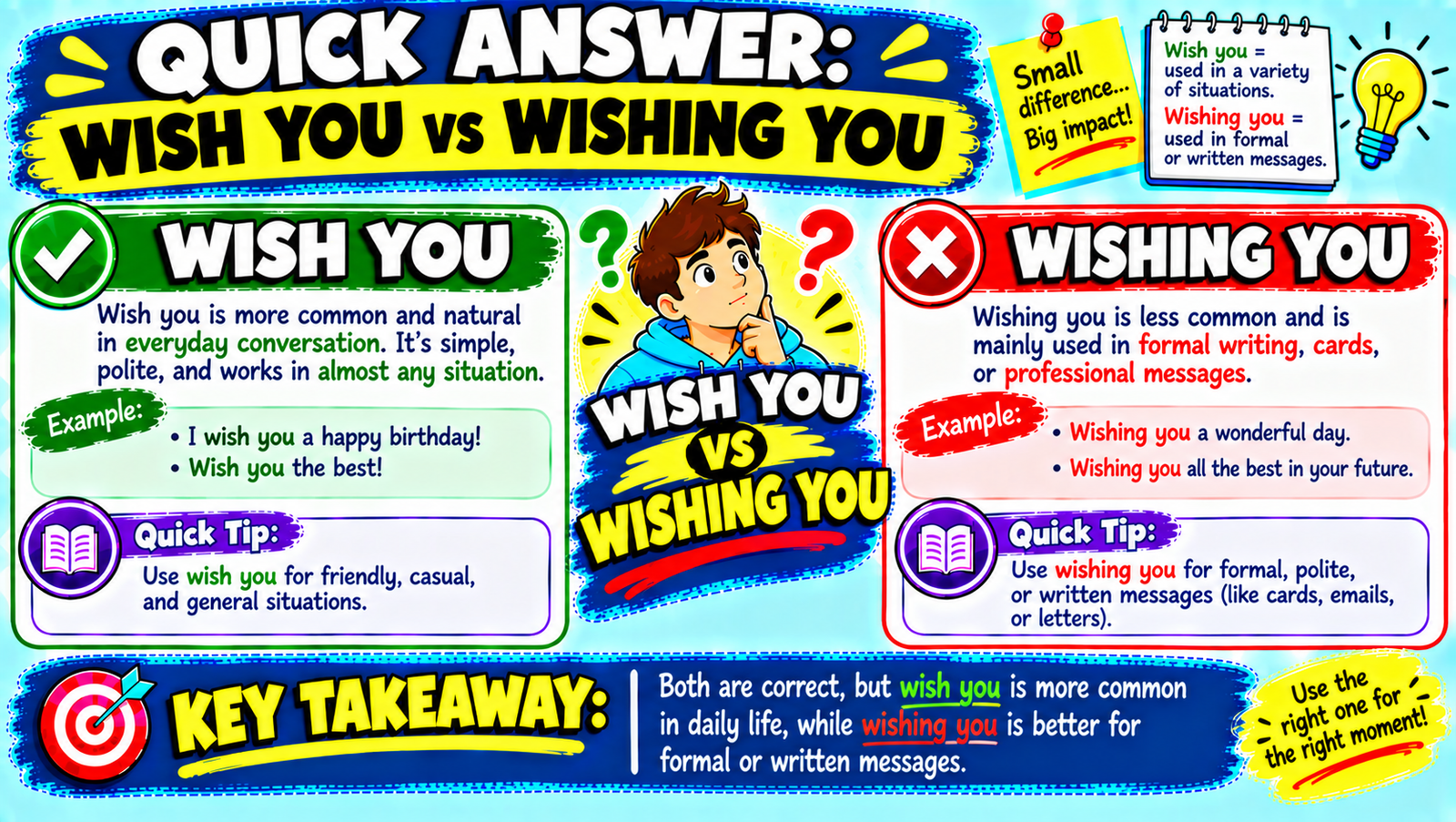
Use “I wish you” or “We wish you” when you want a complete sentence. Use “Wishing you” in cards, captions, and short greetings, where the “I am” is understood. Neither phrase is wrong, but “Wish you” with no subject is clipped and best kept for casual messages. 🎯
Understanding the Basics: Wish You vs Wishing You
Both phrases come from the verb wish, which here means to hope something good for another person. 💬
- Wish you is the simple present form. It normally needs a subject: I wish you luck.
- Wishing you is the present participle. It works as a short phrase that leaves out the subject and helper verb: Wishing you luck.
Comparison Table
| Feature | Wish You | Wishing You |
|---|---|---|
| Grammar form | Verb with a subject | Participle phrase |
| Complete sentence? | Yes, with “I” or “we” | No, it is a fragment |
| Typical use | Speeches, letters, direct messages | Cards, captions, email sign-offs |
| Tone | Personal and direct | Warm and general |
| Example | “I wish you every success.” | “Wishing you every success.” |
Correct Meanings & Uses
Using “I Wish You”
“I wish you” is a full statement. Someone is clearly doing the wishing, so it feels personal and sincere. 🤝 It fits when you speak to a person or write a message to one reader.
Examples:
- “I wish you a speedy recovery.”
- “We wish you the best in your new role.”
- “The whole team wishes you a safe trip.”
Test Tip: Say the sentence out loud. If it sounds right with “I” or “we” at the front, “wish you” is a safe choice.
Using “Wishing You”
“Wishing you” works like a greeting label. It stays on the page or screen and carries the feeling without naming who is wishing. 💌
Examples:
- “Wishing you a calm, happy weekend.”
- “Wishing you strength during this time.”
- “Wishing you and your family a joyful holiday.”
Test Tip: Add “I am” in front. If the sentence still makes sense (“I am wishing you a calm weekend”), then “wishing you” fits as a short greeting.
Why “Wish You” Sometimes Sounds Acceptable
You will see “Wish you a great trip!” in texts and chat apps. 📱 The speaker simply drops the “I,” the same way people say “Hope you feel better” or “Thank you” in place of a longer sentence.
Dropping the subject is natural between friends. It looks careless in a cover letter, a card to a client, or a formal email. ⚠️
Case Study Section
Maria is writing a farewell card for her coworker Tom. Her first draft has two problems. ✍️
Incorrect card:
Hi Tom,
Wish you all the best in your new job. I wishing you lots of success. Will miss you!
Correct card:
Hi Tom,
I wish you all the best in your new job. Wishing you lots of success. We’ll miss you!
What changed?
- “Wish you all the best” gained a subject and became “I wish you all the best.” It reads as a full, sincere sentence. 👍
- “I wishing you” mixes a subject with a participle. It needed either “I wish you” or just “Wishing you.”
Grammar Rules Explanation
A few simple rules explain everything. 🧩
- A simple verb needs a subject. “I wish you luck” is complete. “Wish you luck” leaves out the subject.
- A participle phrase can stand alone in greetings. “Wishing you luck” is a fragment, but it is accepted on cards and captions.
- Never combine both. “I wishing you” and “We wishing you” are errors. “I am wishing you” is grammatical, though it sounds stiff.
- Wish takes two objects here. You wish someone (you) something (luck, joy, health).
- Third person adds -es. “She wishes you well” and “The staff wishes you success” are correct.
- Unreal wishes work differently. After “wish” plus a clause, use a past form: “I wish you were here.”
Common Mistakes
Fast typing
Quick messages produce slips like “I wishing you” or “Wish your a happy birthday.” Reread the first four words before sending. ⌨️
Autocorrect habits
Your phone may “fix” a casual message into something odd, or leave “Wishing you” stranded in a formal sentence. Check greetings that start a message. 📲
Lack of grammar awareness
Many writers assume the two phrases are always interchangeable. The fix is to ask whether you need a complete sentence or a short greeting. 🧠
Similar Grammar Confusions
| Pair | Key Difference | Example |
|---|---|---|
| Wish you / Wish for you | “Wish for” follows the thing you hope will happen | “I wish for you to succeed.” |
| Wish you / Wish you were | The first is a greeting. The second is an unreal wish. | “I wish you luck.” / “I wish you were here.” |
| Wish you / Hope you | “Hope” is followed by a clause | “I hope you have a great day.” |
| Wish / Wishes | “Wishes” is the third-person verb, or the noun | “She wishes you well.” / “Best wishes!” |
| Wish you well / Wish you were well | The first is a farewell. The second is a hope for health. | “I wish you well.” |
Usage in Different Contexts
Everyday Conversation
People say “I wish you a great trip!” when saying goodbye. Casual speakers shorten it to “Wish you luck!” and the meaning stays clear. 🗣️
Professional Writing
In business letters and formal emails, “I wish you every success” is clear and respectful. 💼 “Wishing you a productive week” works well as an email sign-off. Pick the tone that matches your company and your reader.
Creative Writing ✍️
Fiction writers use “wishing you” in letters and postcards that characters send. Dialogue can use the clipped form to sound natural and warm. Fragments are acceptable in narrative voice when they serve the scene.
Social Media and Texting
Captions and comments lean toward “Wishing you…” because it is short and cheerful. 🎉 “Wish you a happy birthday!” is common between friends, and the dropped subject feels relaxed.
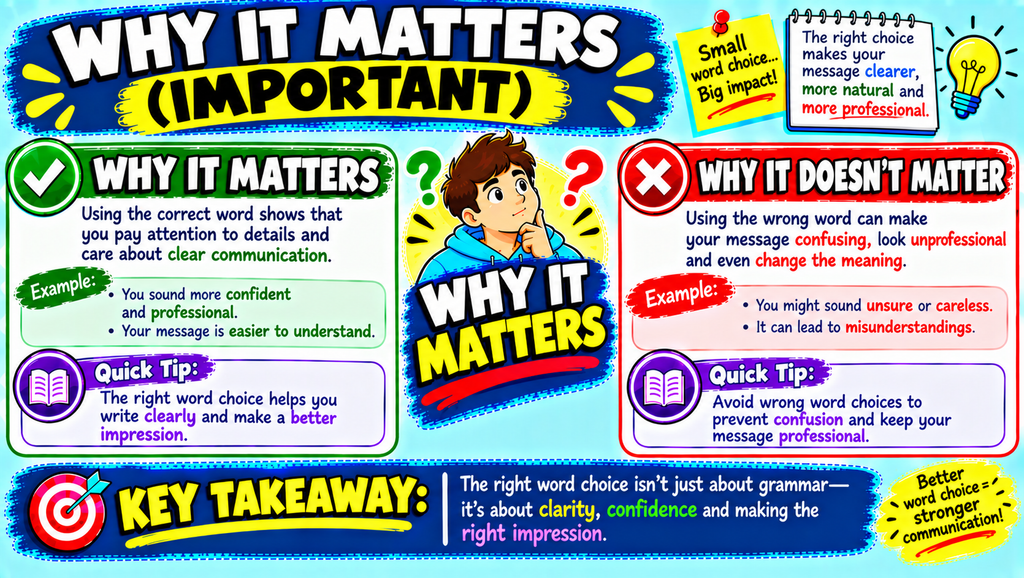
Why It Matters
Clarity in communication
The right form shows who is wishing and how personal the message is. A direct “I wish you” lands more strongly with one reader than a generic greeting. 🔎
Professionalism
Complete sentences add polish to job applications, recommendation letters, and client notes. 🏢
Writing accuracy in digital communication
Short messages get read quickly. A clean greeting helps your reader focus on your kindness and not on the wording. 💻
Special Exception
Some phrases break the simple rules. ⚠️
- “Wish you were here.” This classic postcard line drops the subject. It is also an unreal wish, so it uses “were” and not “are.”
- “Wishing you were here.” This works as a participle phrase tacked onto a larger thought, such as “Lying on the beach, wishing you were here.”
- “I wish you would…” This is not a greeting. It expresses a hope that someone will change a behavior, and it can sound sharp.
- “I wish you well.” This is a fixed farewell phrase. It means you hope things go well for someone, usually after a parting.
Quick Recap Checklist
- ✅ Use “I wish you” or “We wish you” for complete sentences.
- ✅ Use “Wishing you” for cards, captions, and short greetings.
- ✅ Avoid “I wishing you” completely.
- ✅ Keep “Wish you” without a subject for casual texts.
- ✅ Use “wishes” with he, she, it, or a team name.
- ✅ Use “were” for unreal wishes, such as “wish you were here.”
- ✅ Reread the first words of every greeting before you send.
Frequently asked questions: Wish You vs Wishing You
Is it “wish you” or “wishing you”?
Both are fine. Use “I wish you” in a full sentence and “Wishing you” in a short greeting.
Is “wishing you” a complete sentence?
No, it is a fragment. It is widely accepted in cards, captions, and sign-offs.
Can I start a message with “Wish you a happy birthday”?
Yes, in casual texts. For cards or formal messages, add “I” or use “Wishing you.”
Which is more formal, “wish you” or “wishing you”?
“I wish you” is a full, direct sentence, so it suits letters and speeches. Tone depends on context more than on the form.
Is “I am wishing you” correct?
Yes, it is grammatical, but it sounds stiff. Most people choose “I wish you” or “Wishing you.”
Can I use “wishing you” in a business email?
Yes. It works well as a closing line, such as “Wishing you a productive week.”
Is “wish you were here” correct?
Yes. It is a common postcard phrase that leaves out “I” and uses “were” for an unreal wish.
What can follow “wish you”?
A noun phrase such as “luck” or “a happy birthday,” or the word “well.”
Conclusion
The choice between “wish you” and “wishing you” comes down to structure. Use “I wish you” or “We wish you” when you want a complete, personal sentence. Use “Wishing you” when you want a short, warm greeting for a card, caption, or sign-off. 🎉
