
Grammar Writing Perfection. ✨
Grammar. Clear. Perfect.
Fix grammar, spelling, punctuation, and writing instantly with Grammnix, your trusted AI writing assistant for clear, error-free content.
From the Blog
Scrap vs Scrape🤔: What’s the Difference? Meaning, Usage & Examples (2026) ✅
September 12, 2026
If you’ve ever paused mid-sentence wondering whether to write “scrap that idea” or “scrape that idea,” you’re not alone 🤔. These two words look alike, sound almost alike, and even share a common word history — but they mean very different things. This guide breaks down scrap vs scrape in plain English, with clear definitions,
How Long vs How Much Time 🤔: What’s the Difference? Meaning, Usage & Examples ✅
September 11, 2026
If you’ve ever paused mid-sentence wondering whether to say “how long” or “how much time,” you’re not alone 😅. These two phrases look like they mean the same thing, and honestly, most of the time they do — but native speakers pick between them based on subtle cues like formality, tone, and sentence structure. Get
Too Fast vs To Fast: Which Is Correct? Meaning, Grammar Rules & Examples ✅
September 11, 2026
You typed it, stared at it, and then second-guessed yourself. 🤔 Is it “you’re driving too fast” or “you’re driving to fast“? This one-letter mix-up is one of the most common English writing mistakes, and it trips up native speakers just as often as learners. 🚦 The good news? Once you understand the simple rule
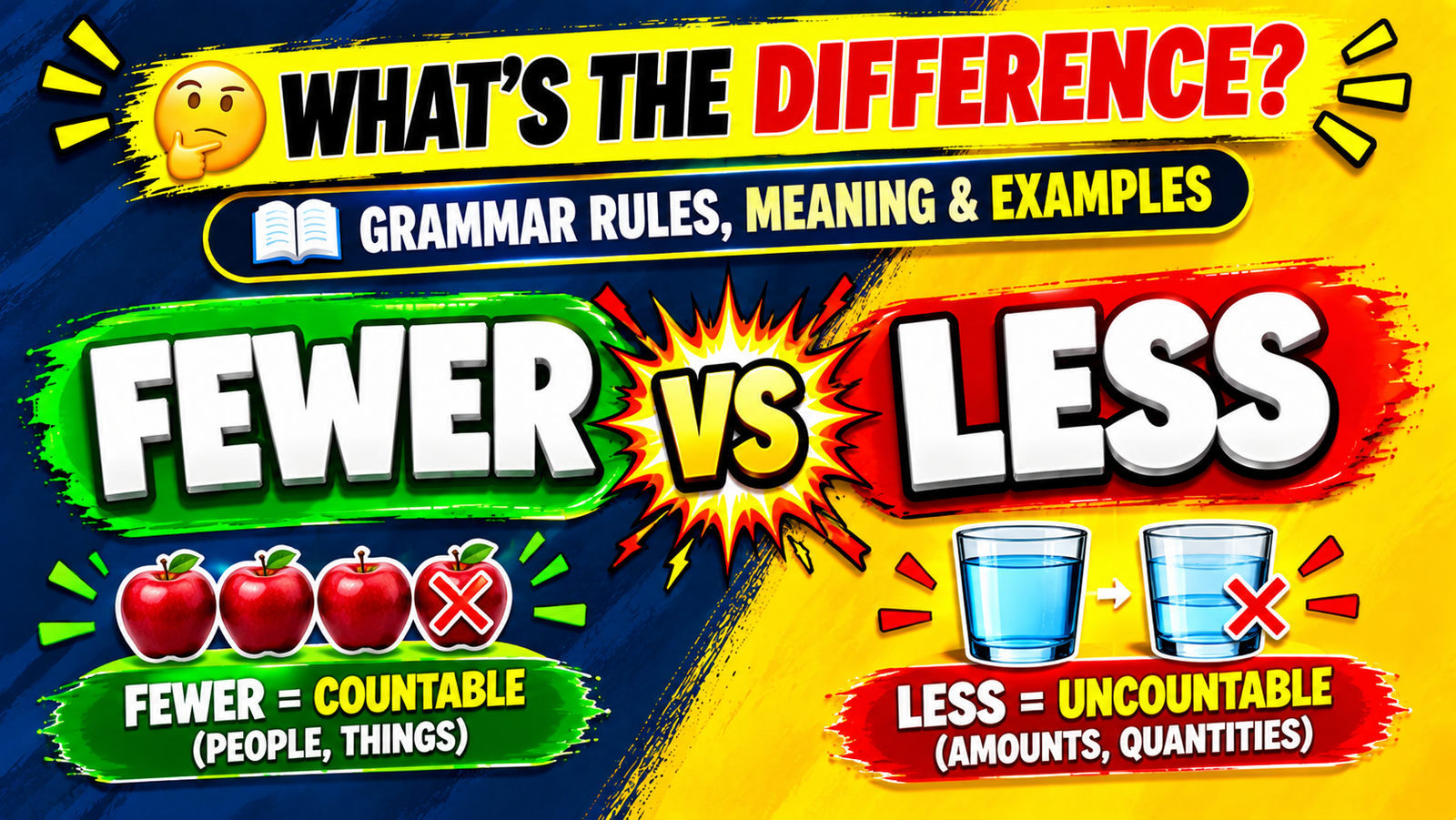
Fewer vs Less 🤔: What’s the Difference? Grammar Rules, Meaning & Examples
September 10, 2026
Have you ever typed “10 items or less” into a grocery list caption and paused, wondering if it should be “fewer”? 🛒 You’re not alone. Fewer vs less is one of the most commonly confused word pairs in the English language, and even professional writers slip up on it from time to time. The good
Choosing vs Chosing: Which Spelling Is Correct? Meaning, Usage & Examples 🤔
September 9, 2026
If you’ve ever paused mid-sentence wondering whether it’s “choosing” or “chosing,” you’re not alone. 😅 This tiny spelling mix-up shows up in emails, essays, and social captions every single day. The good news? The answer is simple, and once you learn the rule, you’ll never second-guess it again. 🎯 Quick Answer: Choosing or Chosing “Choosing”
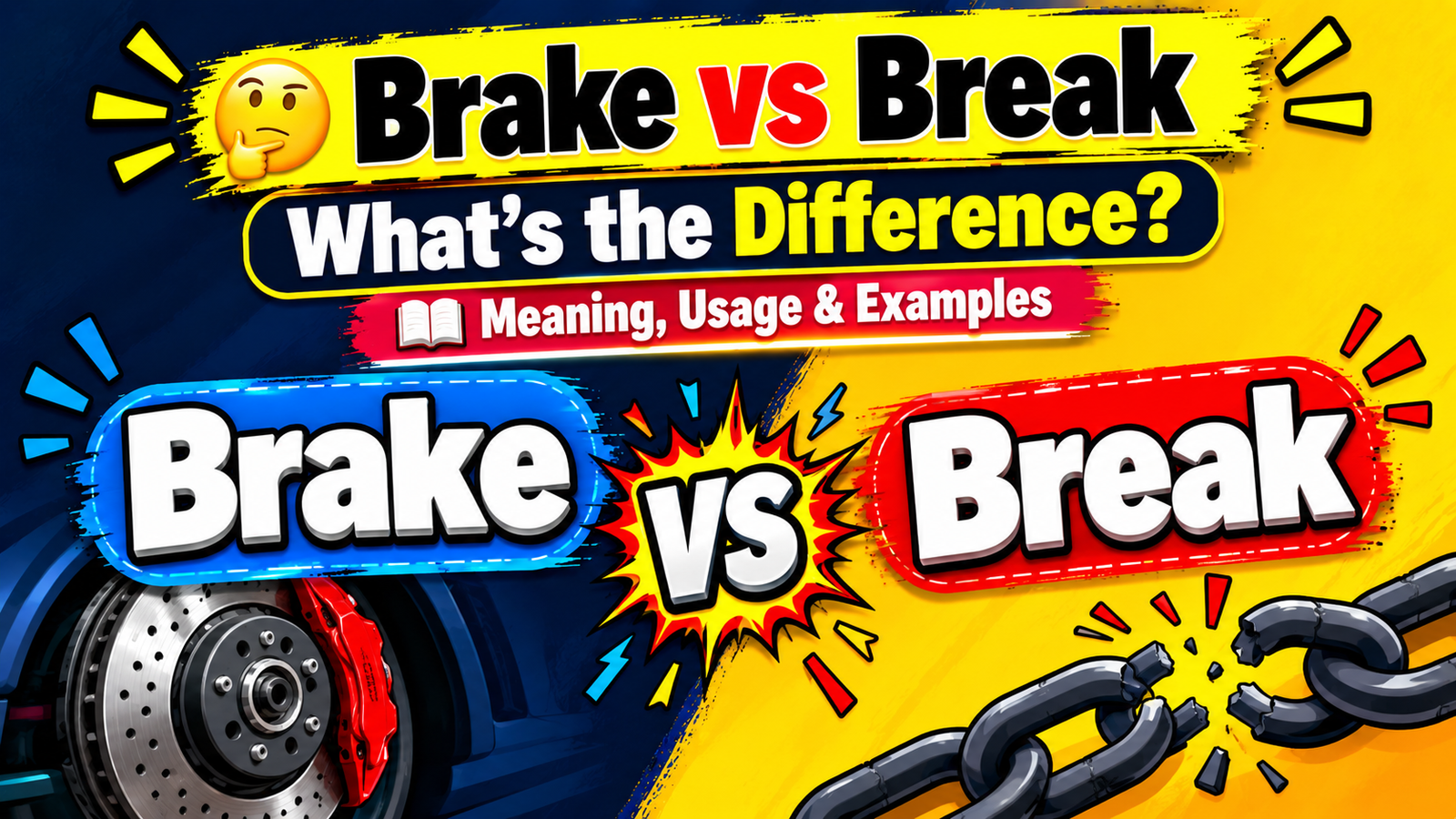
Brake vs. Break 🤔🚗: What’s the Difference? (Meaning, Usage & Examples)
September 9, 2026
If you’ve ever paused mid-sentence wondering whether to type “brake” or “break,” you’re not alone. ✋ These two words are homophones — they sound exactly alike but mean completely different things. Mixing them up is one of the most common English writing mistakes, and it can quietly undercut your credibility in an email, essay, or
What Happen or What Happened? 🤔 Which Is Correct? Meaning, Grammar & Examples
September 8, 2026
If you’ve ever paused mid-sentence wondering whether to type “what happen” or “what happened,” you’re not alone 📝. This tiny mix-up shows up in texts, emails, and even social media captions every single day. The good news? Once you understand the simple rule behind it, you’ll never second-guess yourself again ✅. Quick Answer: What Happen
Preform vs Perform: What’s the Difference? Meaning, Correct Usage & Examples 📚
September 7, 2026
One tiny typo — swap two letters — and “perform” turns into “preform.” 🤔 They look almost identical, but they mean completely different things, and mixing them up in a resume, email, or report can make otherwise polished writing look careless. This guide breaks down what each word actually means, when to use it, and
Run vs Ran 🤔: What’s the Difference? Meaning, Grammar Rules & Examples 📚
September 6, 2026
Ever typed I have ran to the store and paused, wondering if that’s actually correct? 🤔 You’re not alone — run vs ran is one of the most common mix-ups in English, mostly because “run” pulls double duty as both the present tense and the past participle. Confusing the two isn’t just a typo; it’s
Next Friday vs This Friday: What’s the Difference? 📅 (Meaning, Usage & Real-Life Examples)
August 29, 2026
You text a friend: “Let’s grab dinner next Friday.” 💬 They show up seven days later than you meant. 😅 Now you’re standing at an empty restaurant wondering where they are. 🍽️ This mix-up happens constantly, and it’s not really about grammar — both phrases are correct. ✅ It’s about interpretation. “This Friday” and “next